Christopher Wizda · Central Asia & Turkmenistan · Ulaanbaatar
Analysis, programs, and education, from Alaska to the Karakum.
Over fifteen years across the Circumpolar North, Russia, and Central Asia, working in Russian, Turkmen, and Mongolian. I analyze Turkmenistan and the Caspian, build and run international-development programs, and design curricula and train to prepare community members for their endeavors. Start with the track that fits what you're after.
Open to consulting, research, and speaking engagements, as well as the right full-time opportunity.

Three ways in
Or explore everything
Find your fit
Tell me what you need, and I will match it to my background.
Answer a few quick questions. You will get a tailored, copy-ready summary of the capabilities that fit, the evidence behind each, and what I could deliver. Everything traces to real work; reasonable extensions of proven skills are labeled as such.
Analysis, in public
Writing & Research
My weekly work runs on three threads, with a deeper catalog of posts and articles behind them. Everything links out to the original.
The Karakum Brief, Newsletter
Post archive
Every post, grouped by theme. Brief summaries pulled from each piece; tap a title to read it on LinkedIn.
Articles, briefings & books
Publications
Selected work across outlets. Each entry links to the publication or piece.
Central Asian Survey
Review of Raiders, Rulers, and Traders: The Horse and the Rise of Empires, by David Chaffetz
A peer-reviewed review of David Chaffetz's history of the horse as the engine of trade, war, and empire across Eurasia, and its case that the Silk Road is better read as a Horse Road.
History Today
Golden Horses, Red Square
In 1935 Turkmen farmers rode their horses 4,300 kilometers across the Soviet Union to impress Moscow.
Praevisio Institute
Buy From Everyone, Owe No One: The Military Logic of Turkmen Neutrality and the American Opening After Iran
Multi-vector defense procurement as the structural expression of permanent neutrality, drawing on SIPRI arms-transfer data, with the collapse of Iran's conventional force projection opening a niche for US engagement in surveillance, border monitoring, electronic warfare, and Caspian maritime awareness.
The Missing Lane: Turkmenbashi and the Single-Track Risk on the Middle Corridor
The Middle Corridor is single-track and its Kazakh ports are now the binding constraint; the rebuilt southern branch runs at under half capacity.
A Pipeline Their War Made Possible: Why the Trans-Caspian Window Is Open and Already Closing
Why the two capitals that blocked the Trans-Caspian Gas Pipeline for thirty years are now both out of the equation.
Turkmenistan Energy Sector, Commercial and Strategic Brief, 2024-2026
Counterparty architecture, ESG trajectory, and the shift in Beijing and Moscow that narrowed Turkmenistan's strategic frame.
Turkmenistan Energy Sector, Infrastructure and Operations Brief, 2024-2026
The technical layer of the Turkmen gas sector: reserves, processing capacity, the pipeline system, and capital deployment.
Trade Finance Global
Melons and Money: Turkmenistan's Sweetest Economic Symbol
A long-form feature on the melon economy, arguing that heirloom varieties offer a higher-value, less water-intensive alternative to cotton and wheat in a country where agriculture consumes roughly 91% of the water on about 4% arable land. Covers Karakum Canal irrigation, the 2024 export surge and its concentration in the Russian market, seed diversity and sugar content, and melons as a vehicle of national identity.
Salt, Brine, and Strategic Advantage: Turkmenistan's Mineral Wealth and Its Export Potential
My contribution to Metals & Minerals, TFG's supplement on the raw materials underpinning global supply chains. The article (Section 3.2, Chapter 3, Financing) examines Turkmenistan's mineral economy beyond hydrocarbons: the sodium sulfate reserves of the Garabogazköl basin, salt production at Guwlyduz, the sulfur and phosphorite corridor running through Lebap and Mary, and the limestone, gypsum, and construction stone of the Kopet Dag foothills. It weighs a 2024 China Geological Survey and Zhejiang University assessment against CEIC production data, sets Turkmenistan's specialization strategy alongside Kazakhstan's scale, Uzbekistan's downstream integration, and Kyrgyzstan's gold-focused niche, and lays out the water, transport, and environmental constraints that will determine whether extraction can become processing.
The Last Pipeline: How Three Crises Opened the Trans-Caspian Corridor
Three overlapping crises, the India-Pakistan war, the Afghanistan-Pakistan clashes, and the US and Israeli strikes on Iran, froze Turkmenistan's southern TAPI route and its Iran-transit swaps west, leaving the long-stalled Trans-Caspian Pipeline as the one remaining path to Europe.
Black Sands, Blue Gold: Turkmenistan's Natural Gas in a Shifting Caspian Landscape
Turkmen gas, financing terms, and corridor economics in a shifting South Asian and Caspian energy landscape.
Black Sands, Blue Gold: Turkmenistan's Natural Gas in a Shifting South Asian and Caspian Energy Landscape
One of the world's largest gas endowments, an export-first policy paired with subsidized domestic power, and China now taking roughly 70% of outflows as westward routes stay frozen and southern ones stay embattled.
Salt, Brine, and Strategic Advantage: Turkmenistan's Mineral Wealth and Its Export Potential
How Turkmenistan is building a mineral economy around salt, fertilizers, and industrial chemicals to cut reliance on gas.
Turkmenistan's Crypto Gambit: Central Asia's Newest Digital Asset Regime
The January 2026 Law on Virtual Assets and what a stranded-power-to-compute play means for diversification.
Vision 2050: Intensifying Climate Action and Building Resilience in Mongolia
Climate action and resilience financing in Mongolia.
Vision 2050: Intensifying Climate Action and Building Resilience in Mongolia
Climate action and resilience financing in Mongolia.
Equestrian writing
Sovereign Assets & Iron Hooves: Inside Turkmenistan's Equine Trinity
The Akhal-Teke, Yomut, and Goklan read as three distinct horse economies: liquidity, social capital, and sovereign asset.
The Ride That Saved a Breed
The 1935 Ashgabat-to-Moscow endurance ride and what it meant for the survival of the Akhal-Teke horse.
The Akhal-Teke: Born to Endure
Turkmenistan's living national symbol, built around the export-valuation gap that Horse Day crystallized.
Atavatan Turkmenistan
Aziýanyň boks çempionaty: türkmenistanly Döwlet Yslamow ýarym finala çykdy (Asian Boxing Championships: Turkmenistan's Dovlet Islaymov advances to semifinals)
On-the-ground coverage of the 2026 Asian Elite Boxing Championships in Ulaanbaatar (230+ athletes from 25 countries), with featured reports on Turkmenistan's national team and Dovlet Islaymov's 5:0 win to reach the super heavyweight semifinals.
The Turkmen Peace: Permanent Neutrality as an Indigenous Institution
Permanent neutrality read not as a foreign import but as an institution rooted in Turkmen culture.
Makul English-Turkmen Dictionary review
A review of the Makul bilingual dictionary and its place in Turkmen language resources.
Comparative Civilizations Forum
Melodies of the Karakum: What Turkmen Music Reveals About Civilizational Endurance
What Turkmen musical tradition reveals about civilizational endurance, prepared for the comparative-civilizations forum.
Books
Makul Kids English-Turkmen Picture Dictionary: Visual Learning with Words, Images, and Examples
Editorial review for the first children's title in the Makul Dictionary Project, a bilingual picture dictionary organizing several hundred essential English and Turkmen words into thematic units covering animals, food, nature, the human body, transportation, professions, numbers, colors, verbs, and adjectives. Each entry pairs an original illustration by Turkmen artist Yusup Orazgylyjov with the English and Turkmen headword and an example sentence in both languages, supporting comprehension and usage rather than rote vocabulary recall. The volume extends a series that also includes the Makul English-Turkmen Dictionary, Language Handbook, and Proverbs, and serves learners, parents, teachers, and homeschool families.
Makul English-Turkmen Language Handbook
A practical bilingual guide to word formation and real-world usage; cataloged in the Library of Congress.
Makul English & Turkmen Proverbs
A bilingual collection of American and Turkmen proverbs with cross-translations.
Long-form & policy
The Physics of a Palette: How a Color Comes to Be, by Way of One Desert Republic
Where color physically comes from, treated the way an analyst treats any output: a source, a process, and an uncertainty band.
Finding Gökdepe: An AI Experiment, a 145-Year-Old Siege, and the Silence That Only Appeared in One Language
Four frontier AI systems tested on the 1881 siege; one fabricated lament, one category error, one anti-fabrication pass.
Convergent Answers, Divergent Reasoning: Stress-Testing Three Frontier LLMs on a Decade-Scale Strategy Question
Three models, three export options, and a $15B principal-agent gap surfaced by forcing divergence.
Turkmenistan and the C5+1 Framework: Policy Analysis and Strategic Recommendations
How Turkmenistan leverages permanent neutrality and the C5+1 platform on energy and connectivity.
What Can Americans Learn from Mongolians?
On Mongolia's modern value: balancing global influence with a deep respect for cultural tradition.
UN & development reports
UN E-Government Survey 2020 - Turkmenistan, Kyrgyzstan, Tajikistan sections
Country assessments for the UN's flagship e-government survey.
Global Annual Results Reports
Editorial contribution to UNICEF's flagship results reporting.
Mapping Nature for People and the Planet
Translation and editorial for a biodiversity-mapping framework.
Indicators for Inclusive Education (comprehensive manual)
Manual on indicators for inclusive education.
Consolidated Report on Pilot Testing, Sustainable Management of Secondary Metals
Multi-country pilot reporting across Ghana, South Africa, Peru, and Colombia.
Explore Education Reform Initiatives in Public Schools, Kyrgyz Republic
Authored research on education-reform initiatives.
NGO Funding Rule for National Use in Kazakhstan
Research and editorial support.
Robin Hood in Reverse: barriers to redistributive fiscal policy
Editorial and research support on Brazil fiscal policy.
Annual Report of the UN Country Team Thailand
Editorial contribution.
Talks, interviews & appearances
Speaking & Media
Public speaking, radio and forum appearances, and selected media. Recordings are on file; ask for a link or I can point you to the public version where one exists.
A decade and a half with the region
Experience
Grouped by the kind of work rather than a straight timeline, followed by awards.
Awards & Honors
Beyond the desk
Field Range
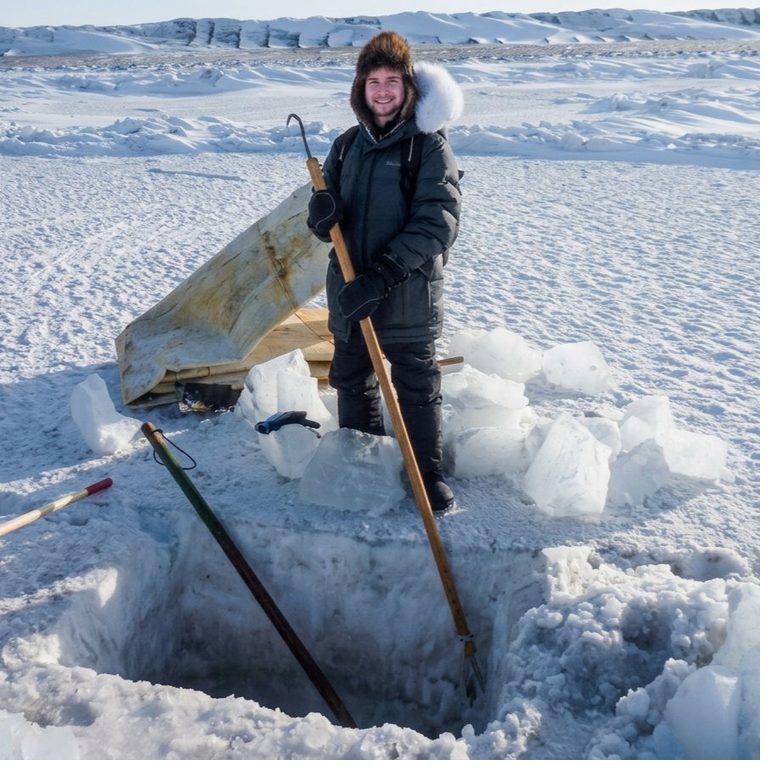
Bush-plane ground school, Arctic survival, EMT certification, mine-safety training, and satellite remote sensing: the unusual range behind the analysis, gathered from Alaska to the Karakum.
About
Christopher Wizda
Central Asia analyst, researcher, educator, and writer based in Ulaanbaatar, with Turkmenistan and the Caspian region as my primary specialization. My work builds on more than a decade of engagement that began with undergraduate research in Kyrgyzstan in 2013 and grew through Turkmen language study, regional fieldwork, service as a Turkmen delegation liaison at the 2015 Special Olympics World Games, contributions to the UN E-Government Survey, and leadership of American Councils' operations in Turkmenistan as Country Director.
Today my work runs across three areas: research and analysis on Turkmenistan, the Caspian, and wider Central Asia, combining open-source research, GIS and satellite imagery, and AI-assisted multilingual analysis of energy markets, trade corridors, governance, and culture; international education, teaching IB Business Management and Cambridge IGCSE Business Studies; and select consulting on country analysis, cultural research, program design, monitoring and evaluation, and stakeholder engagement.
Earlier experience spans research and project contributions for UNICEF, UNDP, UNCDF, ITU, and UN DESA, management of a 20-plus-person team and a multimillion-dollar grant portfolio, teaching in Russia and Mongolia, and private-sector work with Boeing, Honeywell, and Kinross Gold. If your work touches Central Asian policy, Caspian energy, Eurasian trade corridors, or cultural and historical research, I would welcome the conversation. The best way to reach me is on LinkedIn.
On the record